Dec 10, 2025
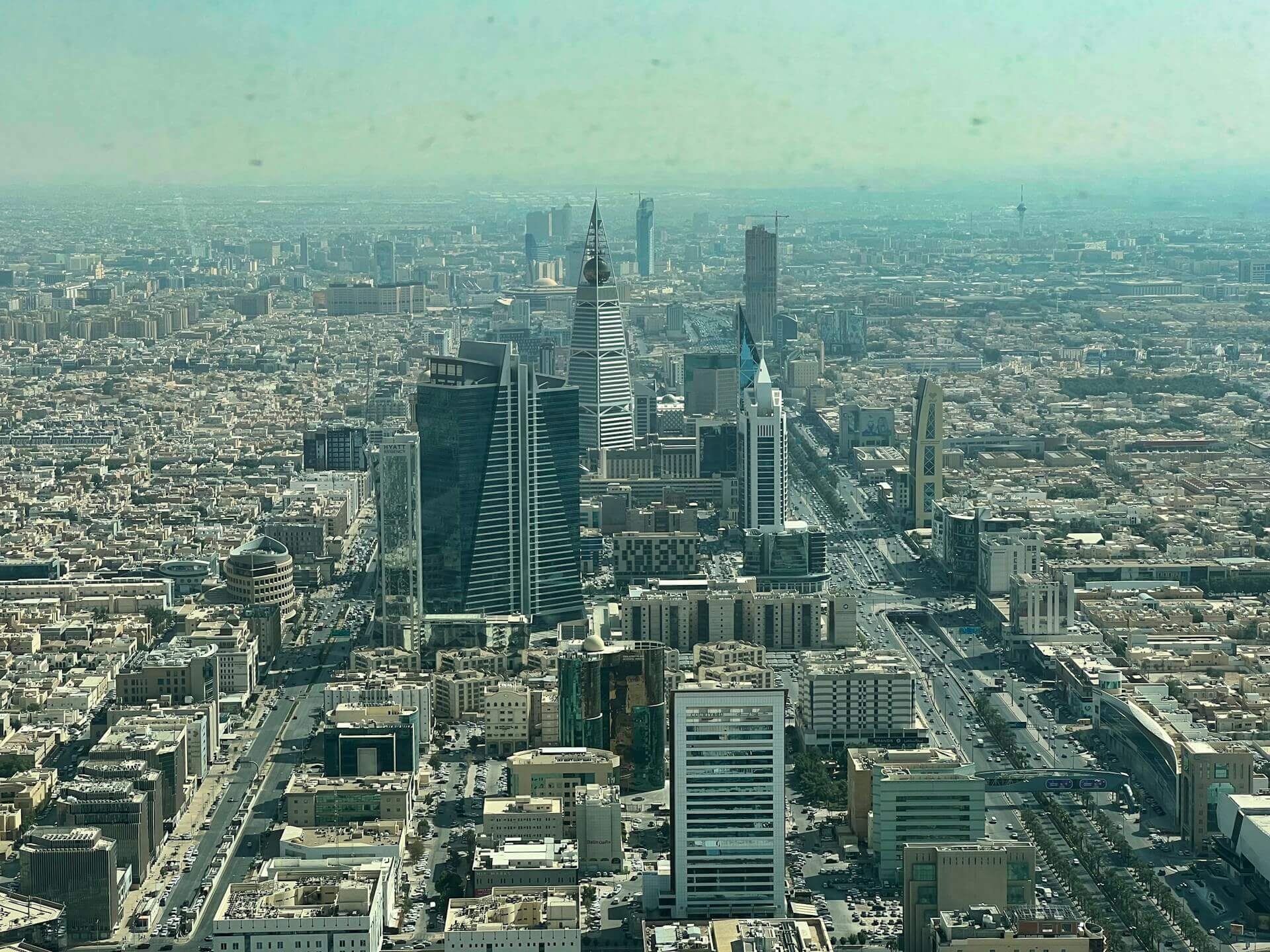
The pace of urban growth in eastern Riyadh is accelerating, highlighting a group of neighborhoods that have become prime destinations for those seeking housing and investment. At the forefront is the Al Nazim District in Riyadh. Despite being one of the oldest districts in the city's eastern region, it has witnessed significant development in its infrastructure and daily services in recent years, with a vast diversity in real estate types, prices, and sizes. This has made it one of the most attractive districts for both families and investors alike.
As Mada Properties, a certified marketing company that monitors the market's pulse and studies its trends in real-time, we share in this report a professional, neutral perspective to help you understand the district's advantages, lifestyle, price trends, demand levels, and the benefits of its strategic location within East Riyadh.
Over the past years, Al Nazim Riyadh has gained a reputation that combines a family-friendly atmosphere with suitable prices. It is a diverse district featuring economical and mid-range properties, alongside modern developments that offer the market new options. Development projects and the city's eastward expansion have contributed to improving the general impression of the district and increasing demand from those seeking stable housing away from congestion and at a reasonable cost.
The district attracts multiple categories of buyers and renters, including families looking for suitable prices, young first-time buyers, and investors interested in purchasing land or units suitable for annual or monthly rental.
Many ask: Al Nazim District Riyadh exit number? The district is accessible via Exit 36 on Khurais Road, which is its most important link to the western parts of the city and serves as its main entrance. This direct connection makes movement to and from the district easy, whether heading towards downtown Riyadh or the ring roads leading to the north and south of the city.
Nearby exits also facilitate easy access to neighboring districts such as Al Sharq, Al Janadriyah, and Al Mu'izilah, all areas experiencing rapid urban growth.
The district occupies a strategic location in the eastern region of the capital and serves as a vital gateway connecting eastern Riyadh to its northeastern extension. Al Nazim District's location offers a key advantage due to its proximity to several main roads, most importantly:
This location has made Al Nazim Riyadh a focal point for those seeking reasonably priced properties within close range of vital services.
For those wondering where Al Nazim District is located in Riyadh, it lies within the boundaries of the Al Naseem municipality in eastern Riyadh, along the city's urban expansion. The district neighbors several prominent areas such as:
To the southwest, it is close to a group of important governmental, educational, and healthcare service centers.
Al Nazim District East Riyadh is one of the most extensive districts in terms of area and sub-developments. It features a mix of active commercial streets and quiet residential areas. The district is distinguished by offering a suitable property type for every category, making it an attractive environment for a large number of residents thanks to:
Al Nazim is one of the largest districts in East Riyadh in terms of urban sprawl, spreading over a wide area where old developments intertwine with modern urban development. This creates a diverse mix of residential and investment options. Although a precise standalone figure for the district's area is not available, it forms an essential part of the Al Naseem municipality, which spans approximately 299 square kilometers.
This vastness gives Al Nazim an open character and flexibility in land use distribution, encompassing diverse plots, housing at different levels, and active commercial zones. The district also occupies a strategic location at the eastern edge of the capital, making it one of the closest districts to the outer expansion and a primary gateway to East Riyadh.
Properties in the district are characterized by a diversity that meets the needs of different budgets, keeping its market active year-round. The most prominent available types include:
A property seeker in Al Nazim needs to study the location within the district, as prices vary depending on proximity to commercial streets, street width, and the surrounding service environment.
Al Nazim District shows a balanced price trajectory compared to other East Riyadh districts, making it a preferred destination for investors looking for reasonably priced properties with promising future growth. Determining the price per square meter in Al Nazim District depends on the property type and its location within the district, in addition to the level of urban development and surrounding services.
Current data indicates that the general average price per square meter for villas reaches around 1,125 Saudi Riyals, with an average purchase price of approximately 675,000 SAR per villa, thanks to the variety of sizes and extensive construction options.
As for residential land, the average purchase price is about 586,209 SAR, while the average price per square meter for residential land reaches around 1,066 SAR. For commercial activity, the indicator rises slightly; the average purchase price for commercial land is about 1,622,326 SAR, with an average price per meter of approximately 1,098 SAR, due to increased demand for sites near vital roads.
Regarding agricultural land, the average purchase price is around 233,654 SAR, while the average price per square meter for agricultural land exceeds 2,110 SAR, given its scarcity within the urban scope.
Despite variations between sub-developments, prices in Al Nazim remain lower than many East Riyadh districts, enhancing its investment appeal. Prices are influenced by a set of factors, most notably:
This diversity in indicators gives the district stable investment value with strong future growth opportunities.
Al Nazim District includes a variety of educational institutions catering to students at different stages, making it a suitable choice for families seeking a residential environment supported by integrated educational services. Schools range between public and private and are characterized by easy accessibility within the district. Notable schools in Al Nazim include:
For students wishing to complete their academic journey, King Saud bin Abdulaziz University for Health Sciences is located only about 12 minutes away, providing a close and suitable opportunity for university education in one of the largest health and educational edifices in the Kingdom.
Al Nazim District is distinguished by an abundance of shopping options covering residents' daily needs without hassle. Grocery stores, supermarkets, and small grocery shops are spread thoughtfully to ensure easy access from various parts of the district. Residents benefit from a variety of stores meeting their food and consumer needs, whether for wholesale or retail. Among the most prominent markets and stores in the district are:
This diversity gives the district a vibrant character and makes daily shopping easier and more flexible, with the availability of vegetable shops, bakeries, and pharmacies in close proximity to most homes.
Al Nazim District boasts a growing network of health centers and clinics that meet residents' daily needs, making access to medical care easy without traveling long distances. Residents benefit from diverse medical services including general care, specialized fields, and emergency services, in addition to the district's proximity to several major hospitals in East Riyadh. Prominent health facilities within the district include:
Inayat Al Aila Hospital is one of the most important healthcare destinations in the area, housing specialized doctors and modern equipment including radiology and medical imaging departments, providing an advanced level of treatment services for district residents and surrounding areas.
Al Nazim District offers a wide range of restaurants and cafés suitable for various tastes, making it a convenient destination for residents looking for fast food or traditional and modern dining experiences. The district features restaurants serving Saudi cuisine, grilled dishes, fast food, alongside international restaurants meeting the needs of families and youth. Famous restaurants in the district include:
The district also includes pastry and sweet shops offering distinctive varieties, such as Lin Sweets and Badiyat Al Sham Sweets. Cafés of various types are spread across several locations within the district, providing indoor and outdoor seating areas that give residents space to relax and enjoy time in a quiet environment.
Al Nazim District provides a comfortable living environment thanks to the spread of public parks and open areas offering residents space for walking, strolling, and family activities. The most prominent of these spaces are Al Nazim Park and Hay Al Nadiwah Park, both daily destinations for residents due to the quiet atmosphere and suitable paths for sports and relaxation.
Residents also benefit from the district's proximity to dedicated children's entertainment destinations like Safari Land and Sparky's, located in neighboring districts only about 20 minutes away, making access easy for families.
In addition to green spaces, the district includes a group of sports clubs catering to the needs of different groups, such as Bahar Al Leqa Club and Rihlat Al Leqa Club, alongside a number of beauty centers and women's resorts like Mashghal Shatha and Mashghal Dar Awrad. This diversity in facilities enhances the quality of life within the district and provides residents with everything they need close to their homes.
Real estate investment in East Riyadh, especially in districts surrounding Al Nazim like Al Khalij, Al Rimal, Al Yarmouk, and Al Salam, is considered a strategic choice for both investors and residents. The location of these districts is distinguished by its proximity to important main roads like Khurais Road and vital side streets such as Al Harith bin Abdullah and Al Raya Street, with easy access to the Eastern Ring Road via Exit 18. This grants investors the opportunity for quick access to other areas of Riyadh.
Real estate projects in these districts vary to meet the different needs of investors, ranging from luxury villas and townhouse units to commercial apartments and offices. Prominent projects reflecting investment quality in the area include:
These projects offer a mix of real estate opportunities for housing or commercial investment, with positive growth expectations due to their strategic location and proximity to vital services and public facilities. The continuous demand for properties in this area makes it one of the profitable destinations for investors seeking long-term returns and real estate value stability.
In short, investing in districts near Al Nazim combines a prime location, integrated services, and diverse opportunities, ensuring an exceptional real estate experience for the investor that keeps pace with market requirements in East Riyadh.
Al Nazim District Riyadh today represents a blend of vital location, suitable prices, and property diversity, making it an accessible and appropriate choice for a large segment of those seeking ownership or investment. With an integrated service network and strong connection to main roads, the district has become one of the most prominent in East Riyadh in terms of demand and growth.
Because choosing the right district requires trustworthy consultation, Mada Properties offers its clients accurate information and carefully studied, diverse offers to ensure the best purchasing or investment experience within the district.
The district is located at Exit 36 from Khurais Road, the vital gateway that directly connects it to the Eastern Ring Road and facilitates access to various areas of Riyadh from the western side. This exit is the main portal for entering and exiting the district, enhancing its navigational value and greatly facilitating the movement of residents and visitors.
Al Nazim District is located in eastern Riyadh city and is considered one of the prominent areas forming an important extension of the capital's eastern front. Administratively, the district follows the Al Naseem municipality and benefits from a location connecting it to a network of vital roads like the Eastern Ring Road and Khurais Street. This grants its residents easy mobility and makes it a comfortable access point to various parts of Riyadh.
It spans a large area containing multi-use sub-developments.
Yes, thanks to the availability of schools, daily services, and recreational facilities.
Stay informed with expert-written articles and the latest trends in the real estate market.
October 26, 2026
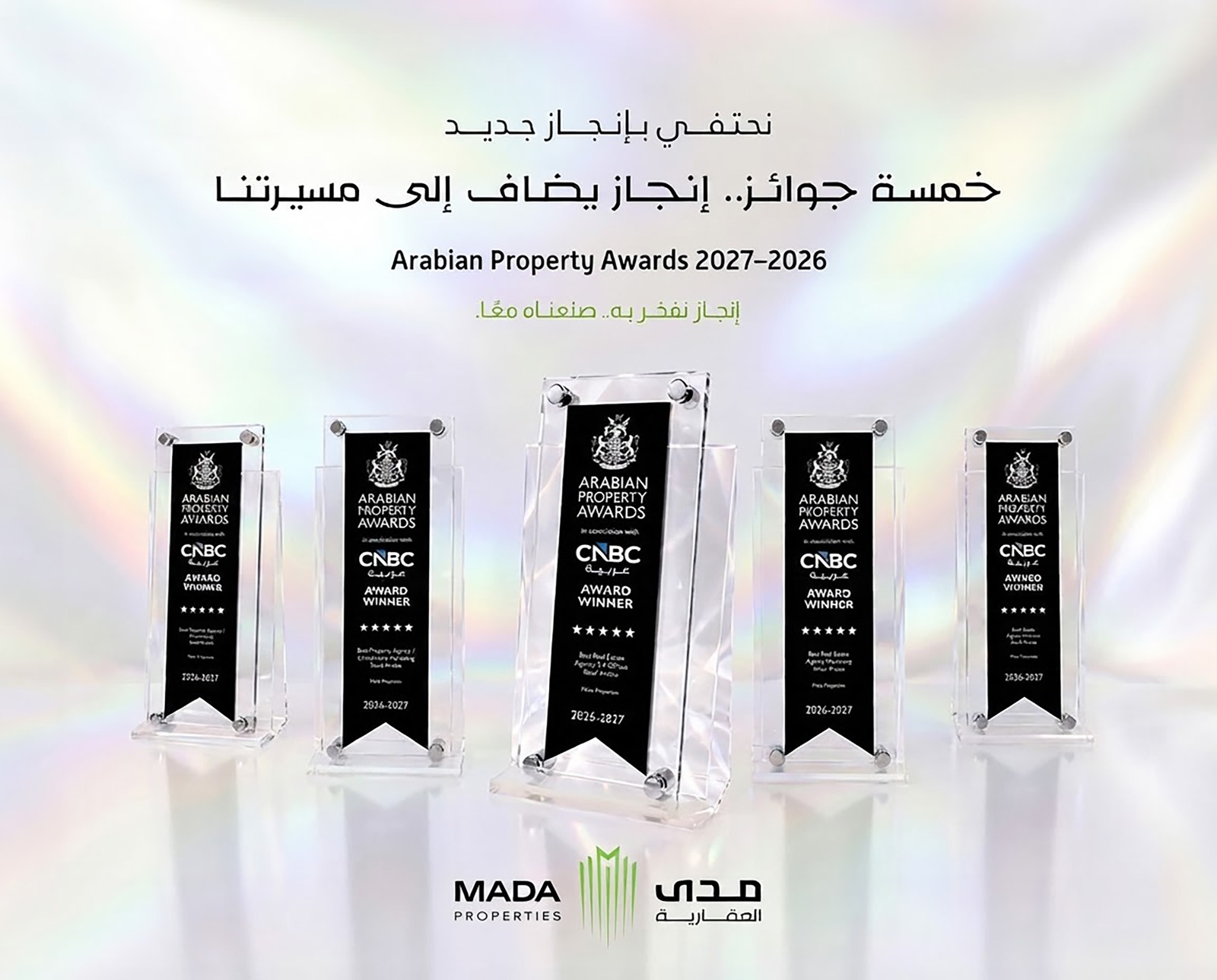
Mada Properties has won five awards at the Saudi Arabia Property Awards 2026-2027, the Saudi categories of the Arabian Property Awards presented in association with CNBC Arabia, each carrying a five-star rating.
The five awards cover the real estate agency, property consultancy, real estate marketing and the agency website. They extend a record that began in the 2023-2024 season with a single category and has grown in every season since.
This article explains what the awards are, how they are judged, what each of the five awards recognises, and how to verify any real estate company's awards before you rely on them.
The Saudi Arabia Property Awards are the Saudi categories of the Arabian Property Awards, which are part of the International Property Awards run by International Property Media in the UK. The awards recognise excellence in real estate, development, architecture, interior design and marketing, in both the residential and commercial sectors, with a focus on service, sustainability, originality and creativity.
The organiser announced a category named "Saudi Arabia Property Awards" and described it as the first global real estate award named after the Kingdom. Entrants apply at national level, a panel of experts judges the entries, and winners are invited to the awards ceremony and may use the award logo in their marketing. That is why Mada's trophies carry the words "Saudi Arabia" after each category name. Top winners in each region then go forward to the international awards.
All five trophies carry the Arabian Property Awards mark, the words "in association with CNBC Arabia", a five-star rating and the 2026-2027 season.
This category is for real estate agencies running between two and four offices. Mada publishes four office addresses in Riyadh: As Sahafah, Al Aridh, Al Rimal and Olaya Street.
A category that combines brokerage and advice. It matches what Mada does when it compares the options on the market and recommends districts and projects according to the client's goal, which is the role of a property consultancy.
This award covers the marketing of a real estate agency. Mada states in its articles that its marketing rests on reading the market, analysing data and reaching the right client.
The marketing category for agencies and advisory firms.
This one concerns the agency's website. Mada's site brings together projects, districts and articles, and a mobile app carries the same content.
See the record of earlier awards on Mada's Awards & Recognition page.
The organiser states that the awards are judged by an independent panel of more than 100 industry experts, chaired by members of the UK House of Lords. Judging focuses on:
The path to an award has five steps:
The 2026 Arabia Property Awards celebration takes place on 5 November 2026 in the House of Lords, London, as a private event for a select number of award-winning companies, according to the event website.
According to Mada's Awards & Recognition page and blog:
The pattern is clear: from one category to five in four seasons. But every season is judged separately, so an earlier award does not replace a look at the current one. For a wider reading of what these awards mean for an investor, see our article on Mada's award success story.
There is no official list that names the best real estate agency in Saudi Arabia, and awards are one signal among several. Whether you want a top real estate consultancy or a brokerage, ask:
A real estate agency handles brokerage and client service from advice to closing, while real estate marketing focuses on reaching clients and showing a project's value. That is why the awards separate the agency category from the marketing category, and Mada won both this season.
Choose an agency that works as a broker, not a developer: it compares projects for you instead of promoting its own.
Mada won two marketing categories this season. From the client's point of view, good marketing shows up in three ways:
We explain our approach in our guide to the best real estate agency in Saudi Arabia.
Many companies display award logos. Checking one takes minutes:
An award assesses a company's performance, while licensing is a legal requirement to operate. A five-star award and a brokerage licence are different things: the first goes to those who excel, the second is something nobody can operate without.
Check the broker's Fal licence, and the licence of the listing, with the Real Estate General Authority before any payment, then look at the awards.
Mada Properties is a professional real estate broker, not a developer, so we start from your goal, not from a project we own. We read the market, compare the options on Mada's projects page and stay with you to closing. The five awards recognise that approach, but they do not replace checking for yourself. Contact us and we will recommend what suits your budget and goal.
The Saudi Arabia Property Awards give clients an independent signal they can verify, provided you read it as it is: a category, a season and a level. Mada Properties holds five five-star awards in 2026-2027, but a good property decision starts with the licence, passes through comparison and is settled with numbers.
October 21, 2026
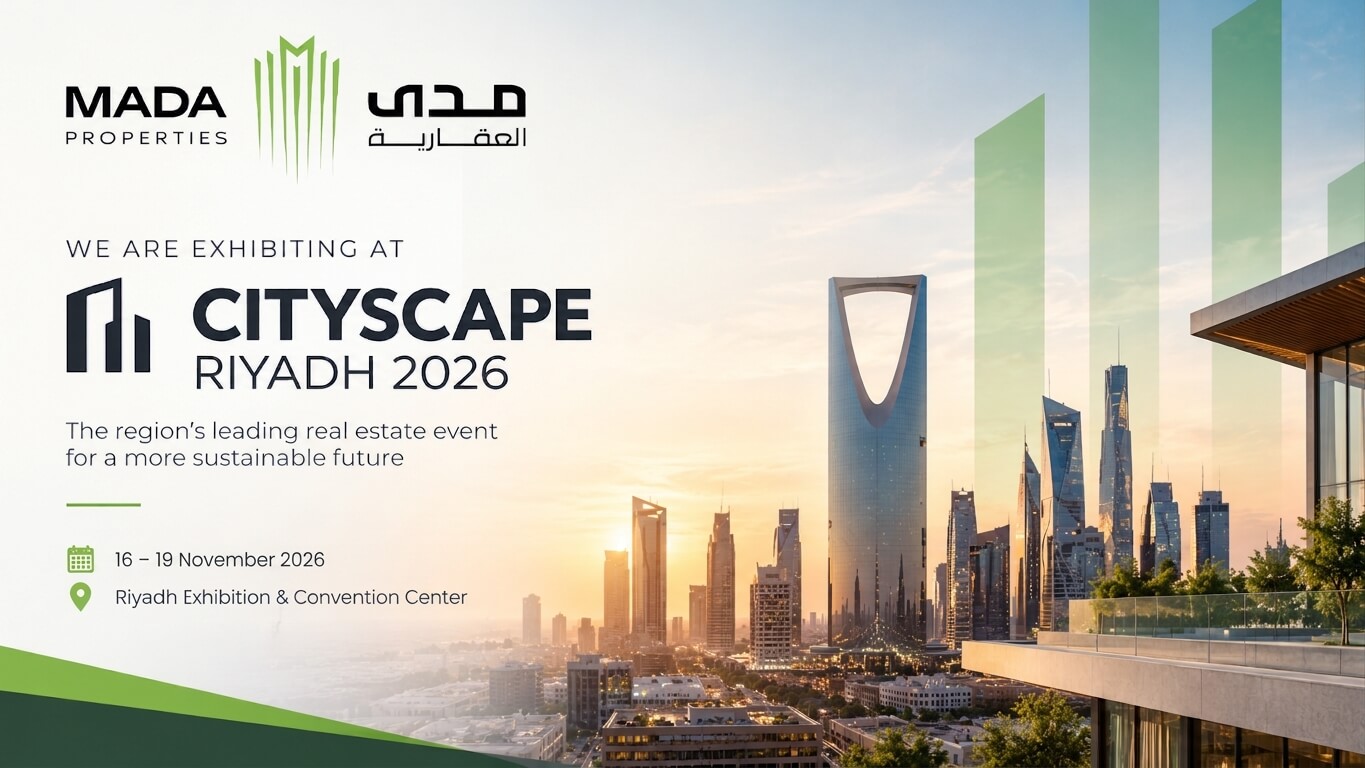
Cityscape 2026 Riyadh runs from 16 to 19 November at the Riyadh Exhibition & Convention Center (Malham), bringing developers, investors, banks and real estate decision-makers together for four days of project launches and deal-making.
The 2025 edition alone announced real estate deals worth SAR 237 billion in four days. That is why Cityscape is no longer only for developers: individual buyers and small investors now attend to see opening prices and payment plans before they reach the open market.
This guide covers what visitors look for most: the Cityscape 2026 date and venue, the exhibitor list, projects and offers, tickets and registration, how to get there, and how to prepare.
Cityscape 2026 Riyadh is the 2026 edition of Cityscape Global, which its organisers describe as the world's most attended real estate exhibition. It is organised by Tahaluf in partnership with the Real Estate General Authority (REGA), and this year's slogan is "The Capital of Real Estate".
The show in numbers:
It arrives months after Saudi Arabia's non-Saudi property ownership law took effect on 22 January 2026, which widened interest from abroad.
The Cityscape 2026 date is Monday 16 to Thursday 19 November 2026. Doors open to visitors from 12:00 pm to 10:00 pm every day.
The venue is the Riyadh Exhibition & Convention Center (Malham) in north Riyadh, about 30 km from King Khalid International Airport according to the organisers. Visitors often call it "Cityscape Malham".
The official exhibitor list is published on the Cityscape Global website and updates until the show opens. Confirmed so far:
Do not rely on the list alone: new launches may be announced during the show, so follow the show's and developers' channels across the four days.
The official ticket page describes mortgage solutions, ownership options and payment plans offered directly by developers and banks. In practice, Cityscape projects and offers come in three forms:
At the 2025 opening, Minister Majed Al-Hogail said real estate loans to individuals and companies reached about SAR 961 billion by Q2 2025 and citizen home ownership passed 65% at end-2024.
A show offer is not always the cheapest price in the market. Ask before you book:
Cityscape Riyadh 2026 offers three ticket categories: General, Business, and VIP. Each pass provides different benefits to suit visitors' needs, from exploring the exhibition to enjoying exclusive networking opportunities and premium hospitality services.
The General Pass is available free for a limited time, reduced from SAR 100. The offer ends on 15 November 2026. Benefits include:
The Business Pass costs SAR 2,438, including 15% VAT, reduced from SAR 3,000. It includes all General Pass benefits, plus:
The VIP Pass costs SAR 9,377, including 15% VAT, reduced from SAR 11,253. It offers a premium event experience with exclusive benefits, including:
The right ticket depends on your goals and budget. The General Pass is ideal for visitors exploring real estate opportunities, while the Business Pass suits professionals seeking networking opportunities and business services. The VIP Pass is designed for visitors who prefer exclusive access and premium hospitality.
Note: Ticket prices, promotional offers, and availability may change. Check the official Cityscape Riyadh 2026 ticketing page before registering.
To register: open the official ticket page or register by WhatsApp, choose a pass, enter your details exactly as on your ID (the pass is linked to your badge), pay by credit card if the pass is paid, then wait for the confirmation and badge emails. Each participant gets one pass only, fees are non-refundable and non-transferable, and accommodation and meals are not included.
The 2025 edition announced SAR 237 billion in deals over four days, including SAR 161.2 billion in the first two days. It also reported a 166,000 m² site (double 2023), 42 countries represented including 15 new ones, USD 6.1 trillion of real estate and infrastructure assets under management, 350+ investment meetings and 164,000+ attendees from 120+ countries.
Mada Properties is a professional real estate broker, not a developer, so we show you options as they stand in the whole market, not as a single developer presents them. Around a show, when offers and quick bookings pile up, a neutral broker compares launches with similar projects outside the show, checks the project's legal status and stays with you to closing. Contact us to compare what you see at the show with what is available today.
Cityscape 2026 Riyadh is the biggest chance this year to see the Saudi property market in one place: what will be launched, at what price and on what payment plan. It rewards visitors who arrive with a plan. Set your goal and budget before 16 November, register early, ask for every offer in writing and compare before you book.
August 27, 2026
Mortgage lending in Saudi Arabia operates inside a defined regulatory framework set by the Saudi Central Bank (SAMA), with each lender layering its own credit policy on top. The practical consequence is that eligibility, and the amount you can borrow, are not a verdict handed down at the branch. They are figures you can work out in advance.
That matters, because most property purchases in Riyadh today are financed over fifteen years or more, and the size of the financing available is what sets the range you can realistically shop in, not the other way round.
Real estate financing is an amount advanced by a bank or a finance company licensed by SAMA to buy a residential property, repaid in monthly instalments that typically run from fifteen to thirty years. The property is registered as security in the lender’s favour until the balance is settled in full.
One point of terminology worth clearing up early: in the Saudi market, "home loan," "mortgage" and "real estate financing" all describe the same thing. The meaningful difference is structural, most products offered in the Kingdom are built on Sharia-compliant contracts rather than interest-bearing lending, which is why you will see profit rates quoted rather than interest rates.
The contract structure varies between lenders. Three are common:
The difference between these is not just nomenclature. It affects when title passes to you, how early settlement is treated, and how insurance is handled. Ask which structure applies to your offer before you sign, not after.
Requirements are broadly consistent across lenders in the Kingdom; what varies are the thresholds:
Four of these decide the outcome more than the rest. They are worth taking in turn.
A complete, internally consistent file shortens the assessment and reduces the chance of rejection. Most lenders ask for:
Check that the details match across documents. A salary figure or employer name that reads differently on the salary certificate than on the bank statement is a routine cause of delay.
The Sakani programme, delivered with the Real Estate Development Fund (REDF), provides support to eligible Saudi nationals, including coverage of part of the profit margin up to a defined financing ceiling. General eligibility conditions:
The financing track adds further conditions: a minimum monthly income, a defined age band, the property being your first home, and an acceptable credit standing.
One point that is regularly missed: eligibility is determined through the Sakani platform, not by the bank. You can meet a lender’s commercial criteria and still fall outside the support criteria, or the reverse. Figures and ceilings are revised periodically, so use the official eligibility calculator rather than numbers quoted second-hand.
Financing is available to non-Saudis, on more conservative terms:
The wider ownership picture changed in 2026. Royal Decree M/14 took effect on 22 January 2026, consolidating non-Saudi property ownership under a single framework, and the Council of Ministers approved the executive regulations and the designated geographic zones in June 2026. Those zones include Riyadh. Because the rules are recent and documentation is still being published, confirm the current position before committing funds.
There is no single best lender, because the right one depends on your employment sector, where your salary is paid, and the type of property. The market offers three categories of provider:
Rather than looking for a ranking, compare offers on five points:
Because pricing and promotions shift, request written offers from more than one provider and compare them on the same day. That is the most reliable way to identify the best option for your particular position.
Most rejections come down to causes you can address before you apply:
A rejection is rarely final. Ask for the reason in writing — it tells you precisely what to fix before the next attempt.
Termination is governed by the terms of your contract and by SAMA regulation. Three situations account for most cases:
Termination is not the same as refinancing. Refinancing moves your existing facility to another provider on better terms while the obligation continues; termination ends the contractual relationship. Read the early settlement clause and its associated fees before you sign, and if you cannot reach a resolution with your lender, a complaint can be raised through SAMA’s official channels.
Mortgage requirements in Saudi Arabia are transparent and verifiable in advance, and the most common mistake is searching for a property before establishing borrowing capacity. The productive order is the reverse: calculate your debt burden ratio, review your SIMAH record, check your eligibility on Sakani, then search within the range that is actually open to you.
Once you're ready, speak with the Mada Properties team for expert guidance based on current market insights.
On a SAR 8,000 salary with no existing commitments, the maximum monthly instalment could reach roughly SAR 4,400 at a 55% debt burden ratio. The corresponding financing amount depends on the repayment term and profit rate offered, which is why the result differs between lenders.
Yes, on more conservative terms — a higher down payment and a repayment term tied to your iqama and employment contract. Sakani and REDF support is not available to non-citizens. Ownership itself now falls under Royal Decree M/14, in force since 22 January 2026, within designated zones that include Riyadh.
Indicative limits run between 55% and 65% of monthly income depending on borrower category and lender policy, and all existing commitments count towards it. Check SAMA’s responsible lending principles for the current position, as they are updated periodically.
SAMA raised the maximum loan-to-value ratio on a first home for Saudi citizens to 90%, putting the minimum down payment at 10%. It falls further on subsidised tracks for properties below a defined value ceiling.
Most products offered in the Kingdom are structured on Sharia-compliant contracts — commonly Murabaha or Ijara Muntahia Bittamleek — rather than interest-bearing lending, which is why lenders quote a profit rate rather than an interest rate.